The recent heatwave in the UK broke the previous June record of 35.6°C, recorded during the 1976 heatwave. In Lingwood, Norfolk, a provisional temperature of 37.7°C was recorded on Friday 26 June, breaking the previous record reached on 28 June 1976 and on 29 June 1957. We asked people to share their memories of the 1976 heatwave. How did they cope, and how did it compare with the 2026 heatwave? This was reported by Qazaqyia.kz citing The Guardian.
Margaret Waring, 87, from Cambridge, says: "The context of the 1976 heatwave was very different. We had a drought. It was a shock to the country because it had never happened like that before." At the time, Margaret taught geography, meteorology and climatology in secondary schools in Manchester. "I'd come home and then we would sometimes share a bath. We'd have to work out who would go in the bath first and not make it too dirty. I had two teenage children and a husband at that time. We didn't have a shower. We devised a siphoning system with a garden hose out of the bathroom window into a plastic bin lined for watering the vegetable patch. And the flowers and the grass were ignored. We also saved water from the washing machine." Apart from water, the current heatwave is more uncomfortable, says Margaret: "The heat didn't seem to be as restricting as it is now. The high humidity and the temperature make it harder to cope. There's a lot more pollution in the atmosphere. There has been an unbelievable change over the last 50 years. But you can come home and you can have one of three showers now."
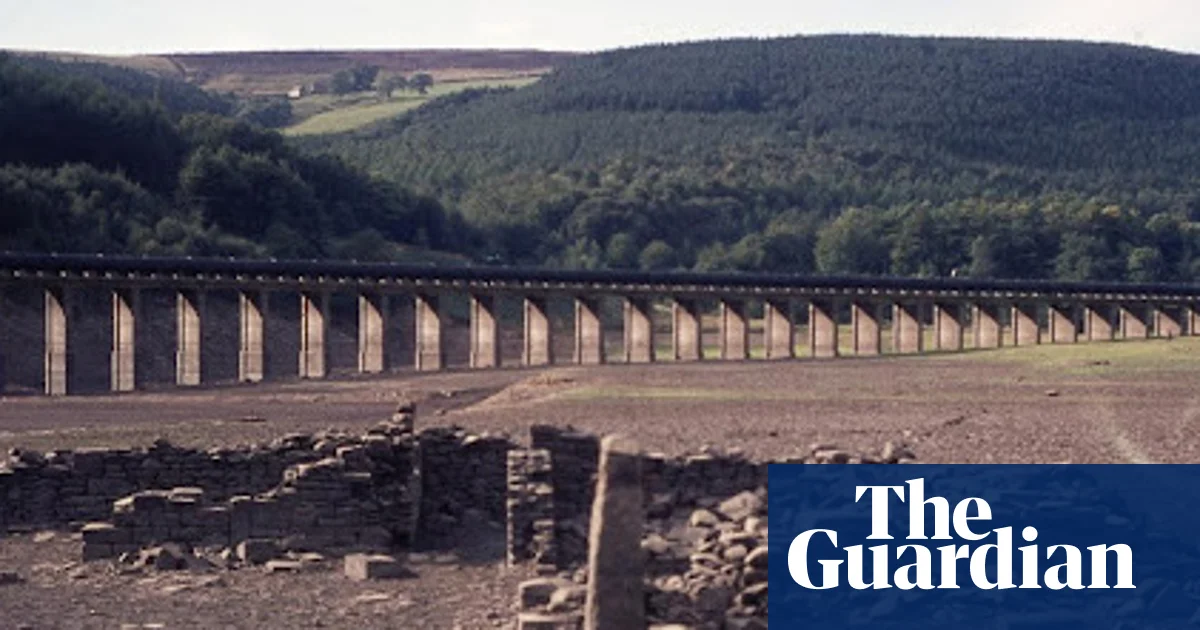
John Ellis, 72, says sitting his finals at Oxford in full gown, shirt, jacket, heavy trousers, mortar board and bow tie during the heatwave of 1976 was "exhausting". "The examination schools building was boiling. It was Victorian, very tall, with a lot of light streaming in. We were allowed to take off our gowns only! We had nine papers between Thursday and Tuesday; it was intense." Once his exams were over, John headed back to Huddersfield, West Yorkshire, to see the "reservoirs empty", including Ladybower in Derbyshire, and the "remains of long-flooded villages exposed" like Derwent. Today, John says he finds it harder to cope in the heat: "I don't know if it is an age thing, but the sun feels stronger, you feel like you're going to burn quickly, and the heat is so enervating. Summers like 1976 were rare, unfortunately we've missed a chance to really stop this. We should have been cutting down on carbon emissions 25-30 years ago, so a measure of this is now inescapable. I think we can still stop it from getting worse if we continue to cut the emissions, but we are going to have to adapt to what's here now."
Susan Gilliam, 79, was pregnant with her first child in a flat in Crystal Palace at the time of the heatwave. "It was fairly awful because it was so very hot and so very dry. In the summer I was lying about doing as little as I could. The birth was difficult, but after that it was almost worse because we had no water. The only water we had was in the toilet. You'd turn on the taps, and nothing would come out. When my son was born, there was nowhere to wash his nappies except in the actual toilet. It was disgusting. We used the one bucket of water that was delivered to us by a lorry each day. You'd queue up with a bucket. They didn't allow you more than one. You'd get your bucket full and that was it for the day. The flat was very well insulated, but not fit for purpose during that heat. I used to take the baby out for walks in Crystal Palace Park."
Mark Hainge, 68, from Hay-on-Wye, recalls a gruelling summer training as an officer cadet at the Royal Military Academy Sandhurst in May 1976. "It just got hotter, and hotter, and hotter. We were given an occasional break – you'd call it a hydration break, I suppose – to guzzle water from a standpipe, a bit like feeding cows. People were ingesting vast quantities of water just to see themselves through the next eight hours. At the end of a day's training, our big old-fashioned khaki flannel shirts would be absolutely soaked through, so you had no option but to wash it, iron it dry, and get it on again, ready for the next day. You don't really question it, aged 18. I think if you made me do it now, there'd be a few questions." Standards at the academy were high: "We could expect the tiniest details of our uniform and turnout to be inspected on parade. After a gruelling hour on the main parade ground, the Scots Guards colour sergeant in charge of our platoon decided to enjoy himself. 'Mr Hainge – show boots!' I bent one leg behind me so that he could check the soles of my boots. 'Dirty boots Sir!' he yelled in triumph before marching me off the parade square and into the guardroom jail. My 'crime' was to have allowed the soles of my boots to collect some of the melting tarmac from the parade ground."
These memories highlight the hardships of the 1976 heatwave and its contrasts with the 2026 heatwave. Heatwaves are becoming more frequent and intense, underscoring the importance of climate action.